Showing posts with label regulations. Show all posts

Monday, February 7, 2011

Regulate, regulate

Why uncertainty about government regulation is stifling job creation:

In President Obama's first two years in office the federal government issued 132 “economically significant” rules, according to Susan Dudley of George Washington University. (“Economically significant” means that either the rule’s costs, or its benefits, exceed $100m a year.)

That is about 40% more than the annual rate under both George Bush junior and Bill Clinton. Many rules associated with the newly passed health-care and financial-reform laws are still to come.

The regulatory workforce has grown 16% in Mr Obama’s first two years in office, to 276,429, while private employment has fallen.

Unquantifiable is the innovation that may be deterred by regulation, The Economist reports. Michael Mandel, a scholar at the Progressive Policy Institute, a think-tank, says some of Mr Obama’s rules, though well intentioned, interfere with the most dynamic parts of the economy.

Rules meant to deter the abuse of student aid by for-profit colleges could stunt the growth of college courses taught over the internet; tighter conditions on drug approvals, prompted by much-publicised scandals, raise the cost of drug research, especially for small companies; and “net neutrality” rules could expose internet-access providers to stifling litigation.

Tuesday, January 18, 2011

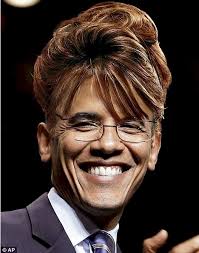
Why Obama is sounding like Sarah Palin

President Obama writes in The Wall Street Journal today that he is ordering "a government-wide review of the rules already on the books to remove outdated regulations that stifle job creation and make our economy less competitive."

Count me as skeptical.

As he transitions his administration to a posture that will get him re-elected, he will say what he needs to say. I prefer to believe his actions. Last year researchers at the Heritage Foundation wrote:
In fiscal year 2009, new regulations costing more than $13 billion per year were adopted by the Bush and Obama Administrations, the highest annual total since 1992. Much more is in the works. Anyone who uses electricity, drives a car, has a job, visits a doctor, owns stocks, or patronizes a bank will be affected by the additional regulation being advanced by the Obama Administration. 
A few months ago they updated the picture:
Based on data from the Government Accountability Office, an unprecedented 43 major new regulations were imposed by Washington. And based on reports from government regulators themselves, the total cost of these rules topped $26.5 billion, far more than any other year for which records are available.

With the enactment of new health care laws, financial regulations, and plans for rulemaking in other areas, the regulatory burden on Americans is set to increase even further in the coming year.
The cost is huge: According to a report recently released by the Small Business Administration, total regulatory costs amount to about $1.75 trillion annually, nearly twice as much as all individual income taxes collected last year.

Here's a picture:


We haven't yet experienced many regulations coming our way:
Many, many more regulations are in the pipeline. According to one estimate, financial regulation legislation recently adopted by Congress, known as the Dodd–Frank bill, will require 243 new formal rule-makings by 11 different federal agencies. So wide-ranging are regulators’ new powers, in fact, that the Department of Health and Human Services has failed to meet one-third of the deadlines mandated by the new federal health care law, according to a report by the Congressional Research Service.

Meanwhile, the new Consumer Financial Protection Bureau created under the Dodd–Frank measure will wield vaguely defined powers to regulate financial products and services, including mortgages, credit cards, even student loans. And, the Federal Communications Commission is mulling new regulations to limit how Internet service providers manage their networks. Such “net neutrality” rules, if enacted, would undermine investment incentives, thereby robbing the nation of much-needed broadband upgrades.
Would I be wrong in thinking that Obama is sounding like Sarah Palin now that he has amassed more government control than any other president in history?